You have a machine to move. First instinct? "We'll grab a forklift and figure it out." Sometimes that works. Often — it doesn't.
A forklift can't go everywhere, a crane is expensive and needs space, and a truck-mounted crane (HDS) has limited reach with capacity dropping fast with distance. In practice, the choice depends on four things: machine weight, where it sits, distance to cover, and what's not visible at first glance — center of gravity, floor condition, passage width, gate height.
Most important: center of gravity
Two 5-ton machines can behave completely differently. One will be stable, the other will pull to one side. That's why when choosing a forklift, crane, or HDS, it's not just the mass that matters — it's the center of gravity location and how the machine is picked up. This often determines whether the operation is safe — or ends in a problem.
Neither a crane nor an HDS will solve the problem if the machine has no secure attachment points or if it's unclear how to safely strap it. Check the manual, find lifting points, determine the center of gravity — before ordering any equipment.
Forklift
The classic. Every hall has a forklift or access to one. But remember: a forklift is designed for pallets — not for machines.
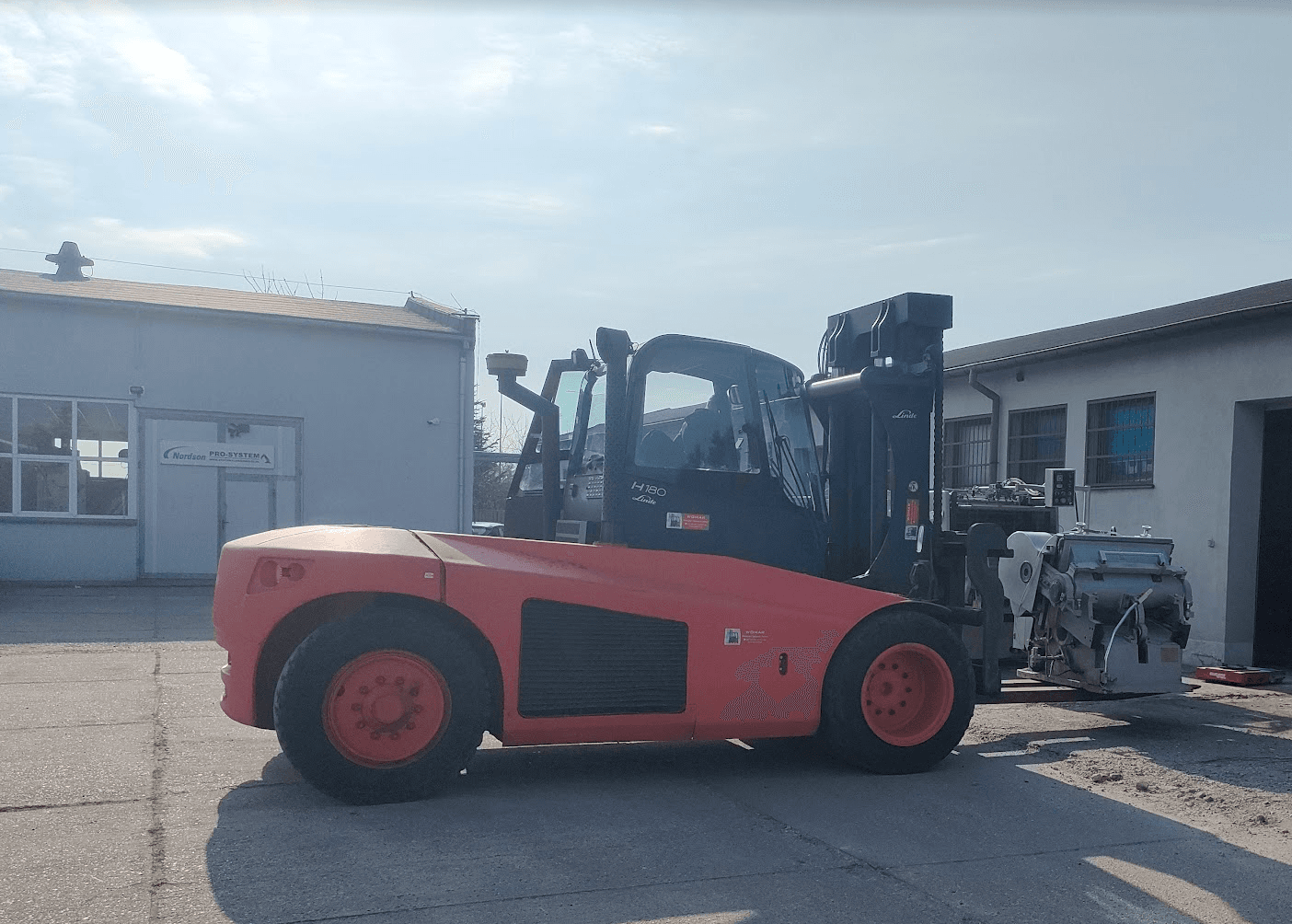
When YES
- Machine weighs realistically up to 2–3 tons.
- Machine has a solid frame or dedicated fork pickup points.
- There's room to maneuver — a forklift needs several meters to turn.
- Floor is level and load-bearing.
- The forklift can physically enter the hall — check the gate height!
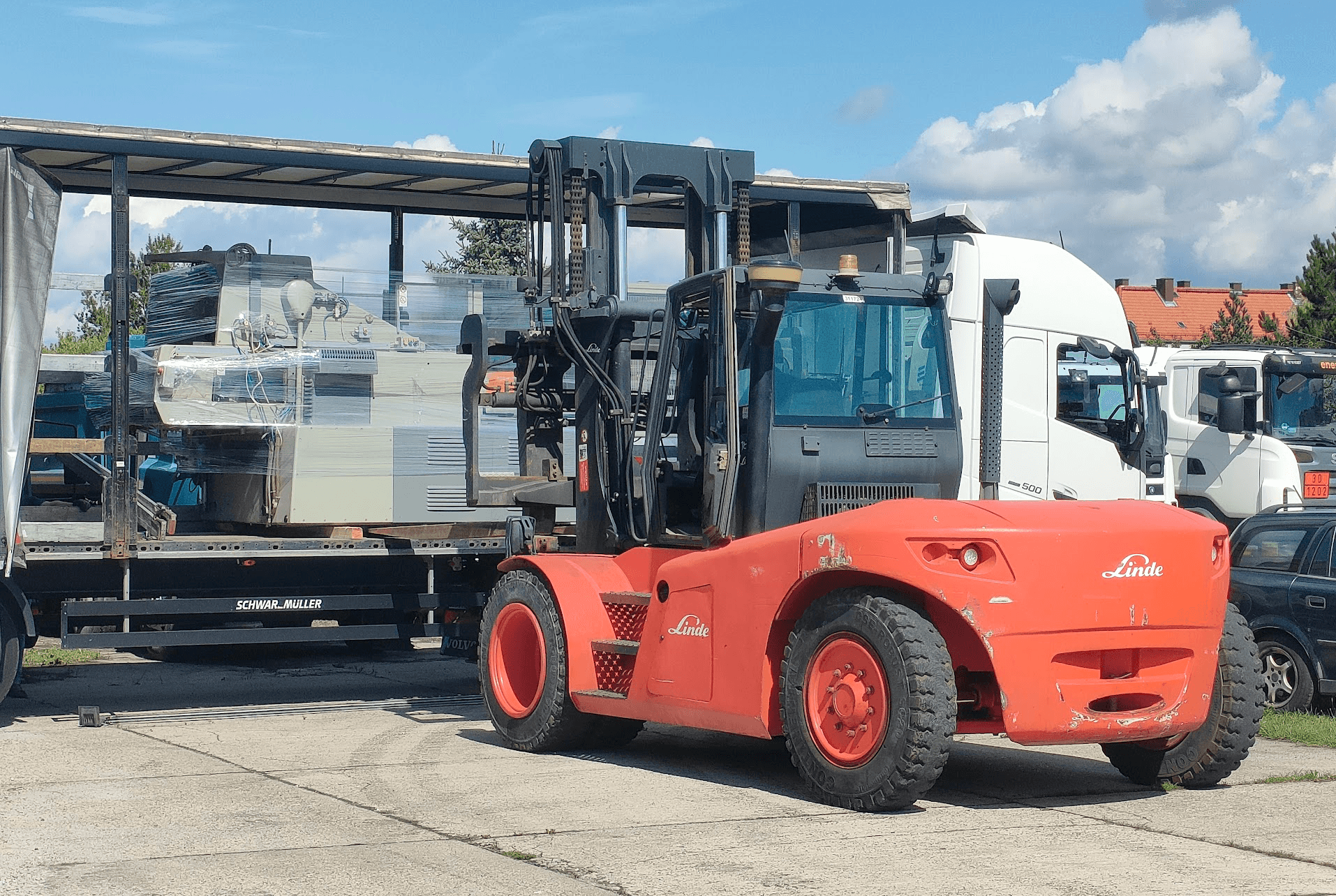
When NO
- No room to maneuver — a counterbalance forklift needs space.
- Machine has low clearance — forks are 40-50 mm thick. Under a machine with 30 mm? Won't fit.
- Floor is weak or sensitive — a 5-ton forklift itself weighs 7-8 tons. A 10-ton forklift — about 15 tons.
Cost* (approximate): Small forklift (1.5-3.5 t) — PLN 300-500/day. Large forklift (5-10 t) with operator — PLN 300-400/h. 18 t forklift with operator — up to PLN 600/h. Plus forklift transport by flatbed: PLN 2,000-3,000.
Crane
Heavy artillery. It'll lift almost anything — but needs space, access, and preparation.
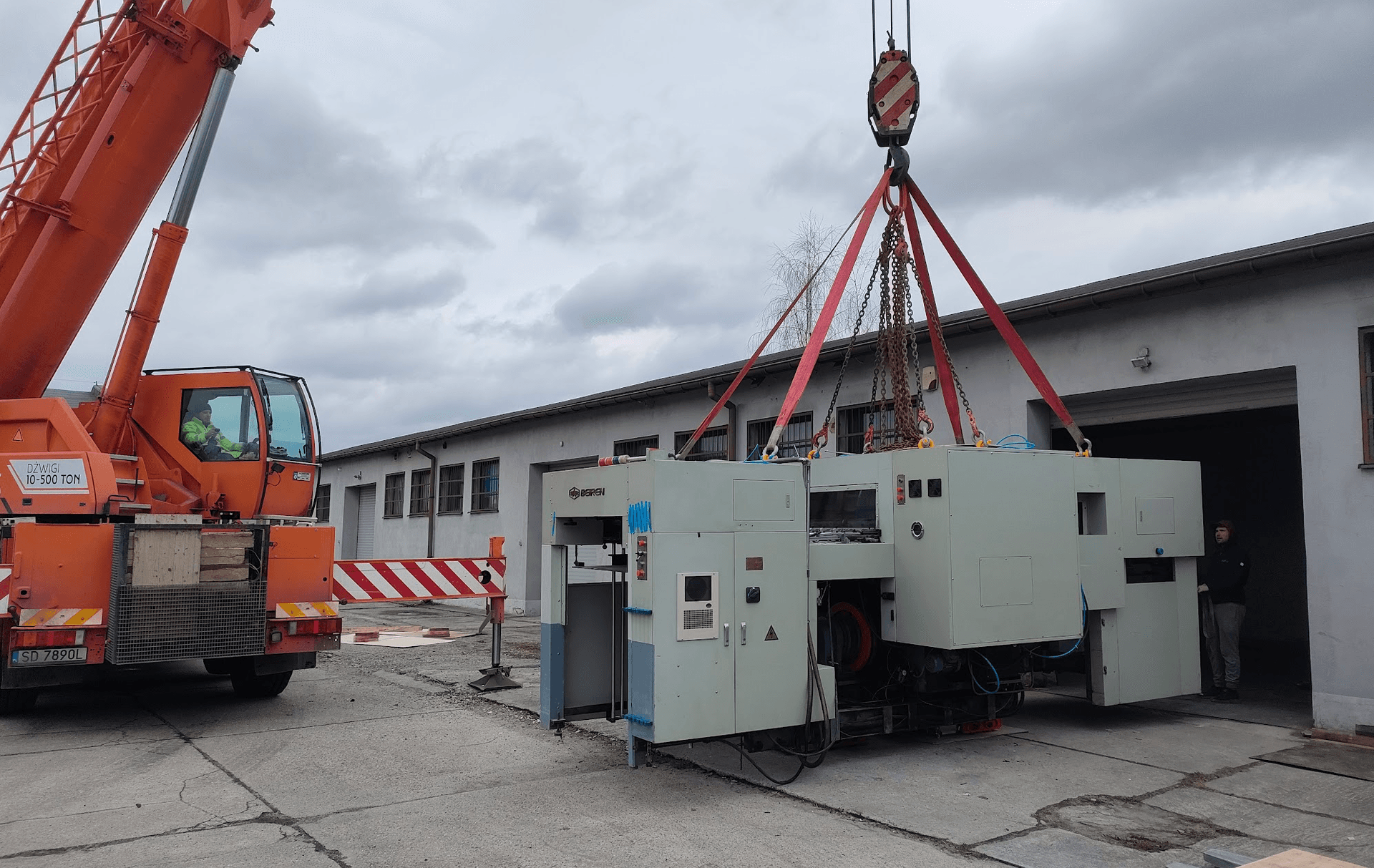
When YES
- Heavy loads — 10, 20, 50 tons and more.
- Loading onto a truck or unloading from one.
- Machine accessible from outside — e.g. already moved to the gate on transport skates.
- There's space for outriggers on stable ground.
When NO
- Machine deep inside the hall — a crane doesn't work inside buildings.
- Low hall — the boom needs height.
- No access road — narrow road, weak ground, low-hanging cables.
Cost*: PLN 2,000-5,000+ per service. For large cranes (50+ t) — significantly more.
Truck-mounted crane (HDS)
A compromise — transport and lifting in one service.
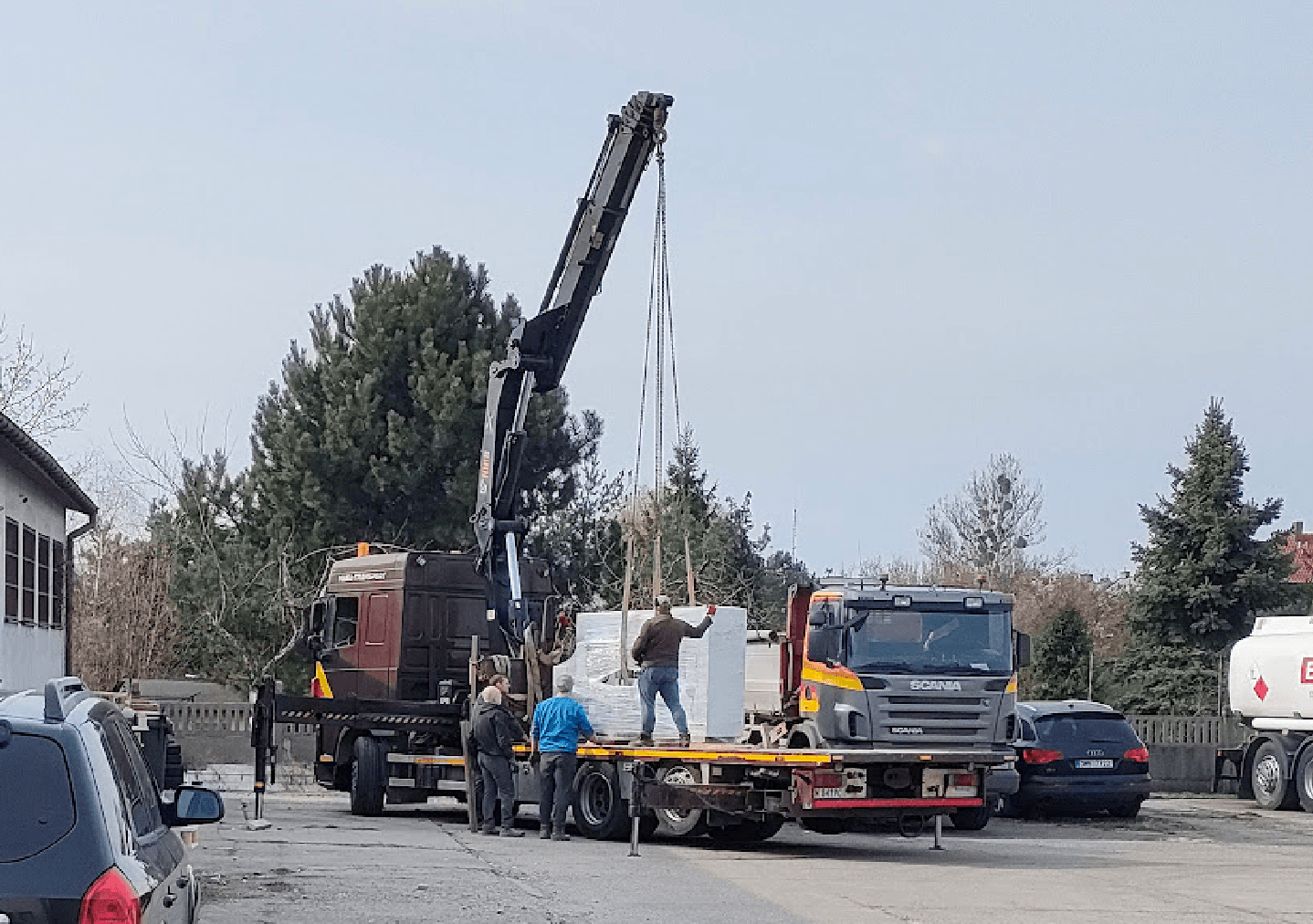
When YES
- Loading and transport in one.
- Machine close to the truck — at short reach.
- Weight up to about 10-15 t — but only at short reach. The further out, the more drastically capacity drops.
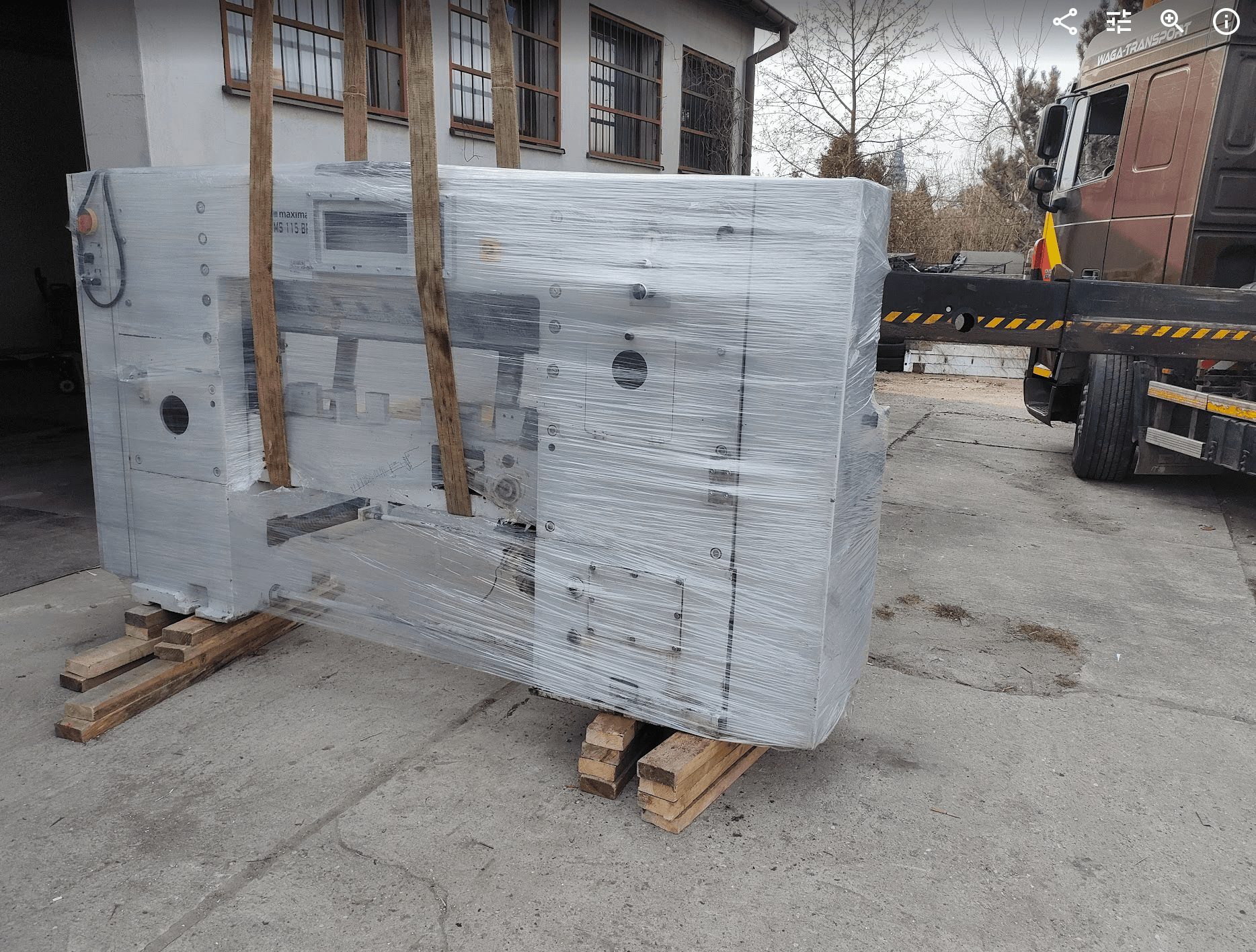
When NO
- Machine deep in the hall — the HDS boom won't reach.
- Large distance from truck — capacity drops drastically with distance.
- Low gate — a truck with crane has its own height.
Cost*: PLN 1,200-2,000 per service.
Transport skates + jacks
Most often overlooked — yet in practice the key tool for working inside the hall.
When YES
- Working inside the hall — any distance.
- Machines up to about 30 tons — on remote-controlled skates.
- No room for a forklift — toe jacks get where a forklift has no chance.
- Precise positioning — placement accurate to centimeters.
- Sensitive floor — skates are safer for epoxy floors than a heavy forklift.
When NO
- Transport between locations — skates are a shop-floor tool.
- Loading onto a truck — that's where you need a crane or HDS.
Cost*: From a few dozen PLN per day.
Method comparison — table
| Criterion | Forklift | Crane | HDS | Skates + jacks |
|---|---|---|---|---|
| Machine weight | up to 2-3 t | up to 50 t+ | up to 15 t | up to 21.6 t |
| In-hall work | Yes (if space) | No | Limited | Yes |
| Outdoor | Yes | Yes | Yes | Limited |
| Precision | Limited | Low | Low | High |
| Epoxy floor | Risk | N/A | N/A | Safe |
| Cost* | PLN 300-600/h + transport | PLN 2,000-5,000+ | PLN 1,200-2,000 | from a few dozen PLN/day |
In practice: combining methods
Most often you don't choose one method — you combine several.
Scenario: 12 t machine, from hall A to hall B
- Toe jacks lift the machine in hall A.
- Transport skates move the machine to the hall gate.
- HDS or crane — loads onto a flatbed.
- Skates again — in hall B from gate to final position.
- Jacks — placement on feet, leveling.
Skates + jacks are the backbone of the entire operation — from first lift to final positioning.
* All prices in this article are estimates based on the Silesia region (southern Poland) as of early 2026, before recent fuel price increases. Actual costs may vary by location and provider.
Need equipment to move or extract a machine from the hall?
Remote-controlled skates up to 15 tonnes, roller sets up to 21.6 t, toe jacks from 10 to 20 tons. We deliver to your site.
Get a quote →We're based in Silesia (southern Poland) and help with industrial machine moves across the region. Tell us what you need — machine type, weight, timeline — and we'll get back to you with options.
kontakt [at] r5rent.pl (click to reveal)