- Machine relocation takes anywhere from a few hours to several weeks — depending on weight, connections, and distance.
- The most time-consuming parts are documentation and reconnecting utilities.
- Good photo documentation can shave days off your restart time.
Moving a machine is not "drive up with a forklift, set it down, and go home." It's photo documentation, disconnecting cables and utilities, securing, lifting, transporting, positioning, reconnecting, and commissioning. The timeline? From a few hours to several weeks. It all depends on what you're dealing with and how well you prepare.
If you're a production manager or business owner trying to plan downtime — this article is for you. Real numbers, real examples, no fluff.
What affects relocation time?
There's no single answer to "how long does relocation take." But there are several factors that determine whether you'll wrap it up in one day or need two weeks.
Weight and dimensions
A 2-ton milling machine and a 25-ton hydraulic press are completely different worlds. A light machine (1–3 t) can be moved in a few hours using jacks and transport skates, even with a small team. A heavy one requires planning every step — from equipment selection, through route reinforcement, to crew coordination. Weight determines everything: what equipment, how many people, how much time for lifting and positioning.
Connection complexity
A machine on 3-phase power alone is one thing. A machine with pneumatics, hydraulics, cooling, central lubrication, control network, and a separate control cabinet — that's another. Each utility means separate disconnection, documentation, securing, and reconnection. And each reconnection is real time for an electrician and automation specialist — and real cost of downtime.
Machine accessibility
Machine sits by the hall gate with clear access? Great, half a day's work. Machine sits in the middle of the hall, surrounded on three sides by other machines, with a shelf blocking the only route? That's a different story. Before you start the actual relocation, you need to clear the path — move other things, disassemble shelving, map out a route. This alone can take as long as the move itself.
Distance
Moving a machine within the same hall — a few meters on transport skates — takes hours. Between halls on the same site? Usually one day. Different location, road transport, loading and unloading? That's when you start counting in days, and for large machines — in weeks.
Photo documentation
This sounds like a waste of time, but it's the exact opposite. One hour of photos before disconnecting cables = days saved during reconnection. An electrician reconnecting the machine at a new location works much better with 100 photos than with a colleague's memory of where things "probably" went.
Angles and thresholds
Exiting a hall at an angle, floor thresholds, level differences, ramps — these can add hours. With long machines on skates, every turn means the rear swings the opposite way. And if the rear catches on the floor or doorframe — you need to reverse, add shims, reposition, and try again.
Real-world time estimates
The table below is based on our experience. These are approximate ranges — your machine may take more or less time, but this gives you a reference point.
| Machine type | Weight | Scope of work | Time |
|---|---|---|---|
| CNC milling machine | 3 t | Within hall, no disconnection | 2-4 h |
| CNC lathe | 5 t | Between halls, full disconnection | 1-2 days |
| Die-cutter (platen press) | 15 t | Different location, full relocation | 3-5 days |
| Hydraulic press | 25 t | Different location + foundation | 5-10 days (or more with complex foundations) |
| Production line (5 machines) | varies | Full line relocation | 2-4 weeks |
Notice the jump between a single machine and a production line. It's not just because there are five of them. A line consists of interconnected machines — feeders, conveyors, synchronization — and every element needs to be disconnected, moved, and reconnected while preserving their relationships.
What takes the most time (and how to reduce it)
Documentation — do it first, not last
Photograph all key connections — especially power, control, communication, and sensors. It's not about every wire in the harness — it's about the points where things disconnect and where mistakes happen easily. The most important are the disconnection points — where you unscrew, unplug, or separate. That's where errors occur during reassembly. Label cables with tape or marker BEFORE disconnection. This literally saves days during reconnection — because nobody remembers which gray wire out of twenty goes where.
Finding an electrician mid-move — book one BEFORE
The most common mistake: you disconnect the machine yourselves, transport it yourselves, and then it turns out the electrician/automation specialist isn't available for three days. Your machine sits idle, you lose money. Book the electrician for a specific day, with buffer time. And make sure it's an automation specialist — not a residential electrician. That's a completely different skill set.
No equipment — don't wait for a crane
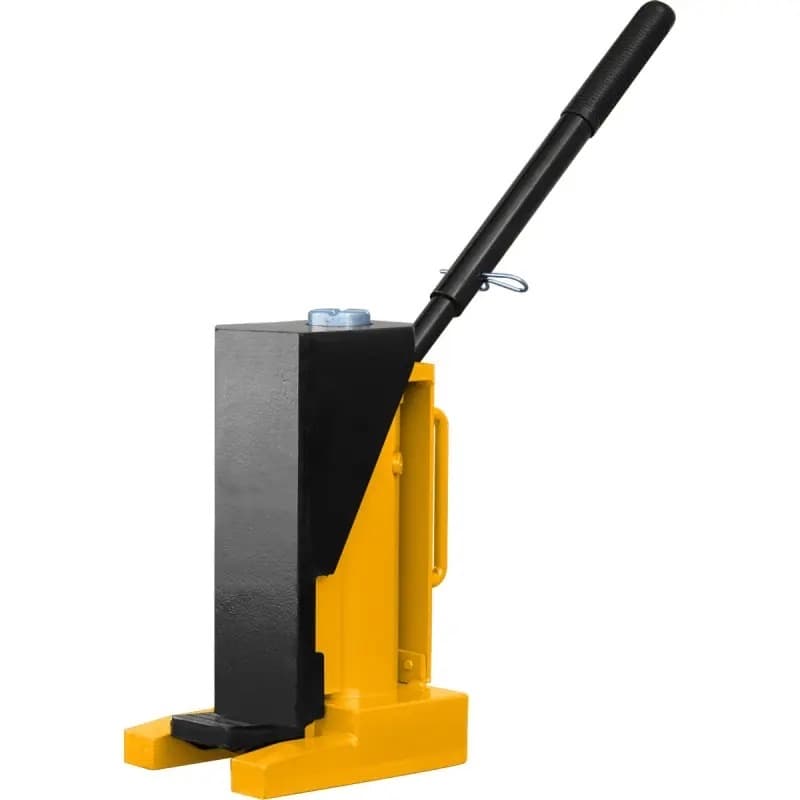
Waiting for an available crane or a forklift with the right capacity can delay relocation by days. Meanwhile, relocation equipment — toe jacks, transport skates, pry bars — can be rented with delivery to your site. In most cases you don't need a certified operator (as with a crane or forklift), because you're working with mechanical equipment. No waiting for an operator. Your crew, your schedule.
Surprises
Machine welded to the floor. Cables in a channel nobody has opened in ten years. A foundation that turned out twice as deep as in the documentation. Anchor bolts nobody knew about. You can't plan time for surprises — but you can limit them by doing a thorough inspection before relocation. Walk around the machine, look underneath, check channels, ask the people who've worked on it for years.
Relocation stages with estimated times
Every relocation — regardless of machine size — goes through the same stages. Only the duration of each varies.
1. Planning and documentation (1-3 days)
Photo documentation, cable labeling, weight and center of gravity assessment, route measurement, equipment ordering, crew scheduling. Don't cut this stage short — every hour here saves hours later.
2. Disconnecting utilities and disassembly (0.5-2 days)
Disconnecting power, pneumatics, hydraulics, cooling, network. Disassembly of parts that can't travel with the machine — feeders, guards, accessories. Securing moving parts.
3. Lifting and transport (0.5-1 day)
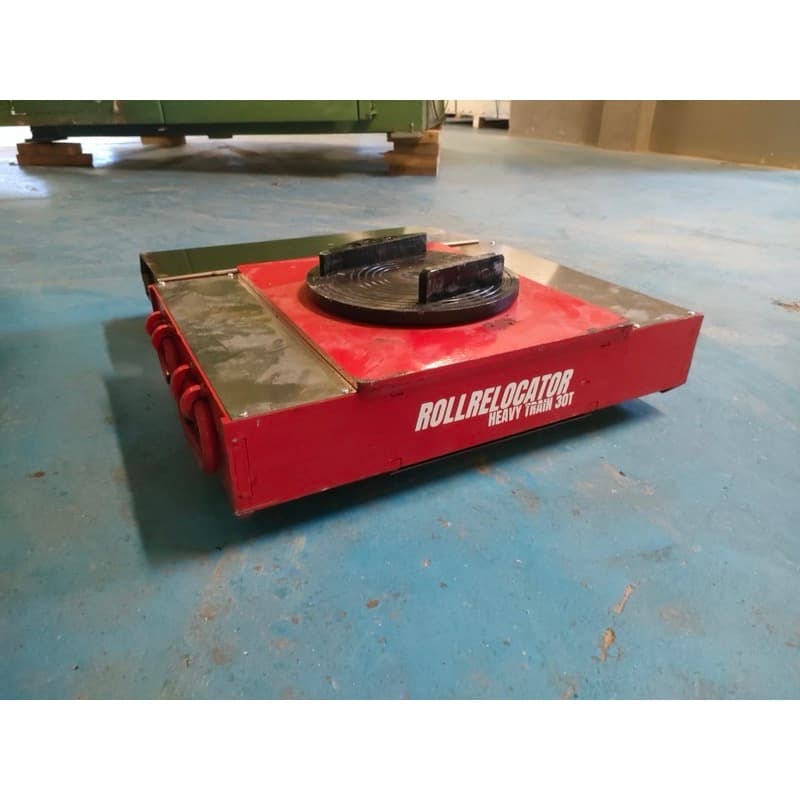
This is where toe jacks come in — they get under machines from just 35 mm clearance, lifting up to 10-20 tons. Then remote-controlled transport skates slide underneath — you move machines up to 15 tonnes by remote control, precisely, without jerking — with proper floor preparation and even load distribution. For transport between locations, add loading onto a truck and unloading.
4. Positioning and leveling (0.5-1 day)
Placing the machine at its destination, initial leveling on adjustment feet, checking level in two axes. After 24-48 hours the machine "settles" — it's worth rechecking the level.
5. Connection and commissioning (1-3 days)
This is where your electrician/automation specialist returns. Connecting utilities, checking connections, no-load test, calibration, test part. For CNC machines this is often the longest stage — because you need to verify geometry, tool offsets, and machining parameters.
When to hire a company vs. DIY?
Do it yourself if...
You have a well-coordinated crew that knows the machine. You have time for proper documentation. The machine is relatively simple — doesn't require specialized calibration after setup. In that case, renting equipment + your people = the cheapest option. You rent skates, jacks, pry bars — and get to work. You're not paying for a relocation company, you're paying for equipment and your own time.
Hire a company if...
The machine is critical and you can't afford mistakes. You don't have experienced people. Transport is complex — different location, public roads, pilot car needed. The machine is under warranty and the manufacturer requires relocation by a certified company.
In both cases
You need a good electrician/automation specialist. There's no shortcut here. You can move the machine yourself, you can hire a company — but connection and commissioning is a job for someone who knows PLCs, industrial networks, and has experience with that type of machine. If you don't have one on staff, find one early and book them.
* All prices mentioned in this article are estimates based on the Silesia region (southern Poland) as of early 2026, before recent fuel price increases. Actual costs may vary by location and provider.
Planning a relocation?
We have equipment for lifting and transporting machines up to 20 tonnes — remote-controlled skates (up to 15 t), transport roller sets, toe jacks, pry bars. Everything delivered to your site. Send an inquiry and we'll suggest what you need.
Get a quote →We're based in Silesia (southern Poland) and help with industrial machine moves across the region. Tell us what you need — machine type, weight, timeline — and we'll get back to you with options.
kontakt [at] r5rent.pl (click to reveal)