- Printing machines are heavy (die-cutters 12-25 t), long (offset presses), and precise (tolerances in tenths of a mm).
- Relocation is not just transport — it's disassembly, securing, setup, and recalibration.
- Most problems come from missing documentation, unsecured moving parts, and bad center of gravity estimation.
Printing machines are a specific category. They're heavy — a die-cutter (platen press) weighs 12–25 tons. They're big — offset presses run over a dozen meters long. And they're precise — working tolerances are in tenths of a millimeter.
Moving them requires knowing these machines inside out, not just having transport equipment. This article covers what to watch out for when relocating die-cutters, paper cutters, and offset presses — from someone who's done it.
Die-cutters / platen presses (Bobst, Beiren, KAMA, Heidelberg)
Typical weight: 12–25 tons. This is not a forklift job.
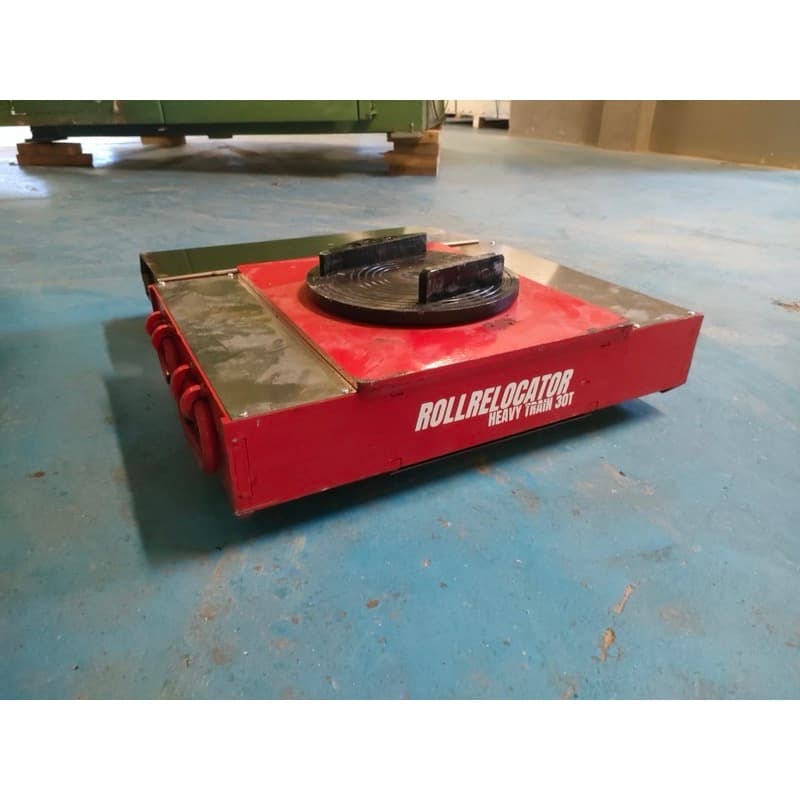
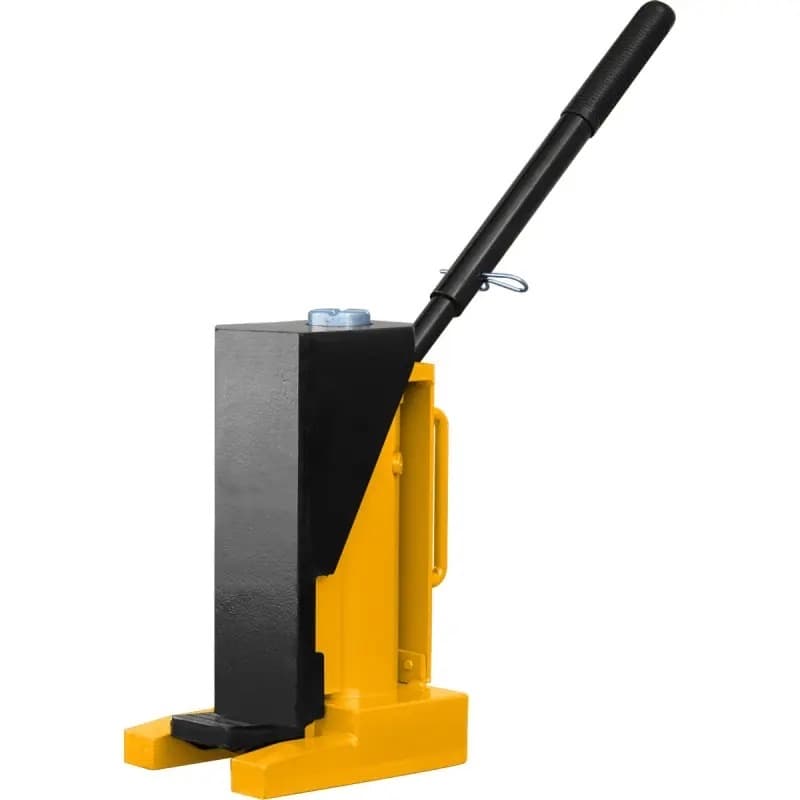
Equipment needed: transport skates (min. 30 t set) + toe jacks 15–20 t.
Vacuum pump
A separate vacuum unit for the sheet feeder. It has its own power supply and often pneumatic connections. This needs to be documented and disconnected separately — it's not part of the main machine frame but is critical for operation.
Sheet feeder
Often requires disassembly before transport. Mandatory photo documentation of all settings — feeder height, suction cup positions, air settings. Without this, dialing the feeder back in after relocation can take days.
Delivery section
Lightweight components but highly susceptible to damage. Thin guide rails, chain grippers, stacking mechanisms — all need to be secured against vibrations during transport.
Center of gravity
Usually shifted toward the main drive. This means the machine pulls to one side on transport skates. Know this before you start moving — or the machine will surprise you mid-hall.
Platen mechanism and crank drive
The work table must be in the bottom position and locked before transport. An unsecured platen mechanism in a 20-ton machine in motion is a serious safety hazard.
Paper cutters / guillotines (Polar, Senator, Schneider)
Typical weight: 2–8 tons.
Equipment: toe jacks ~10 t + transport skates.
Blade
Upper position + mechanical lock — non-negotiable. A guillotine blade without a safety lock is a real, life-threatening hazard. Verify the lock before anyone touches the machine.
Clamping beam
Secure against dropping. If the machine tilts during transport, the beam can shift — and that's a few hundred kilograms of steel in motion.
Control system (HMI / computer)
Sensitive to vibrations and shocks. Best to remove and transport separately, or at least secure with foam padding. A damaged controller on a Polar costs more than the entire relocation.
Back table
Often protrudes beyond the machine's footprint. Include it in your transport dimensions — many people forget and then wonder why the machine doesn't fit through the door.
Offset presses (Heidelberg, KBA, Komori)
Typical weight: 5–40 tons (depending on format and number of colors). The machine consists of sections (colors), each being a separate module.
Inking system
Empty the ink fountains and clean the ink rollers. Ink left in the machine during transport = mess, corrosion risk, and hours of cleanup after. This is not optional.
Rubber and steel rollers
Best to remove them. If left in, make absolutely sure there's no point-load pressure on the rubber — it deforms permanently. Rollers are expensive to replace.
Dampening system
Empty all tanks. Secure against leakage. Dampening fluid on the hall floor + transport skates = a slip hazard you don't want.
Section-by-section transport
Each section is transported as a separate module. Each section needs its own lifting plan, its own set of skates, and coordinated movement. This is where the complexity multiplies.
Calibration after relocation
Color registration requires adjustment after every relocation. This means either a manufacturer service call or a very experienced operator. Budget for this — it's not optional, it's part of the relocation cost.
Quick comparison
| Machine type | Weight | Equipment | Time |
|---|---|---|---|
| Die-cutter (platen press) | 12–25 t | RC skates 30t + jacks 15-20t | 3-5 days |
| Paper cutter (guillotine) | 2–8 t | Jacks 10t + skates | 0.5-1 day |
| Offset press (small format) | 5–15 t | Skates per section | 2-3 days |
| Offset press (large multi-color) | 15–40 t | Full skate set + crane for loading | 1-2 weeks |
Typical hazards in print shops
- Floor channels — print shops have cable/pipe channels in the floor. Transport skates can drop into them. Secure with plates or boards before starting.
- Oil, ink, dust on the floor — slip hazard. Clean the entire route before transport. This is not optional — a multi-ton machine on a slippery floor is out of control.
- Drain grates — can block transport skates. Remove or cover them.
- Ramps and thresholds — check the approach angle. Long machines can "bottom out" in the middle. If the machine is 6 meters long and the ramp has a steep angle, the center hangs in the air while the ends sit on the floor.
- Maneuvering space — check passage widths and ceiling heights. An offset press is long — turning it requires serious clearance.
Do it yourself or hire a company?
Your crew + rented equipment
Makes sense when: you know the machine, you're moving smaller equipment (cutters, small die-cutters), and you have time to prepare. Rent the transport equipment — skates, jacks — and let your people handle it.
Relocation company
Worth it when: the machine is large (offset presses, production lines), you lack experience, or the equipment value is high and you can't afford a mistake.
Mixed model (usually optimal)
This is what works best in practice:
- Your crew: documentation, labeling, accessory disassembly
- Rented equipment: skates, jacks
- Manufacturer service: connection and calibration
* All prices and timelines in this article are estimates based on the Silesia region (southern Poland) as of early 2026, before recent fuel price increases. Actual costs may vary by location, machine condition, and provider.
Moving a die-cutter or an offset press?
We have remote-controlled skates rated for 30 tons — built for heavy printing machines. Toe jacks, pry bars, everything delivered to your site.
Get a quote →We're based in Silesia (southern Poland) and help with industrial machine moves across the region. Tell us what you need — machine type, weight, timeline — and we'll get back to you with options.
kontakt [at] r5rent.pl (click to reveal)