- Machines up to ~5 tons are the most common relocation case in small and medium shops.
- You can often do it yourself — with the right equipment and preparation.
- The biggest risk is not the weight — it's lack of planning, bad lifting points, and rushing.
Machines weighing up to about 5 tons are the most common relocation case in small and medium manufacturing shops. This category includes CNC milling machines, CNC lathes, grinders, paper cutters, and small injection molding machines.
You can often handle this relocation with your own crew, provided you use the right equipment, know the basic rules, and prepare properly. You don't always need a relocation company — but that doesn't mean you can wing it.
Even a 2-ton machine can cause serious injury or death if it tips, slides, or drops. If you're doing this yourself, every person on the crew must understand the risks: never stand under a lifted machine, never rush, and stop immediately if anything feels wrong. No schedule is worth a crushed limb. If you're unsure — hire professionals.
Machine weight — don't just trust the nameplate
The weight on the nameplate is usually the machine in its nominal state. In practice:
- Add coolant, hydraulic oil, and accessories
- Weight distribution is often uneven
- Center of gravity is frequently shifted
Always check the manufacturer's documentation, add a safety margin when selecting equipment, and never assume the weight is evenly distributed.
Example machines in this range
| Machine | Approx. weight |
|---|---|
| Haas VF-2 | ~3.4 t |
| DMG Mori CMX 50 U | ~4.5–5 t |
| CNC lathes (typical) | 2–4 t |
| Paper cutters (e.g. Polar) | 2–5 t |
| Injection molders 50-80 t | 2–4 t |
| Grinders | 1.5–4 t |
These are approximate values — always check the specific model.
Relocation equipment
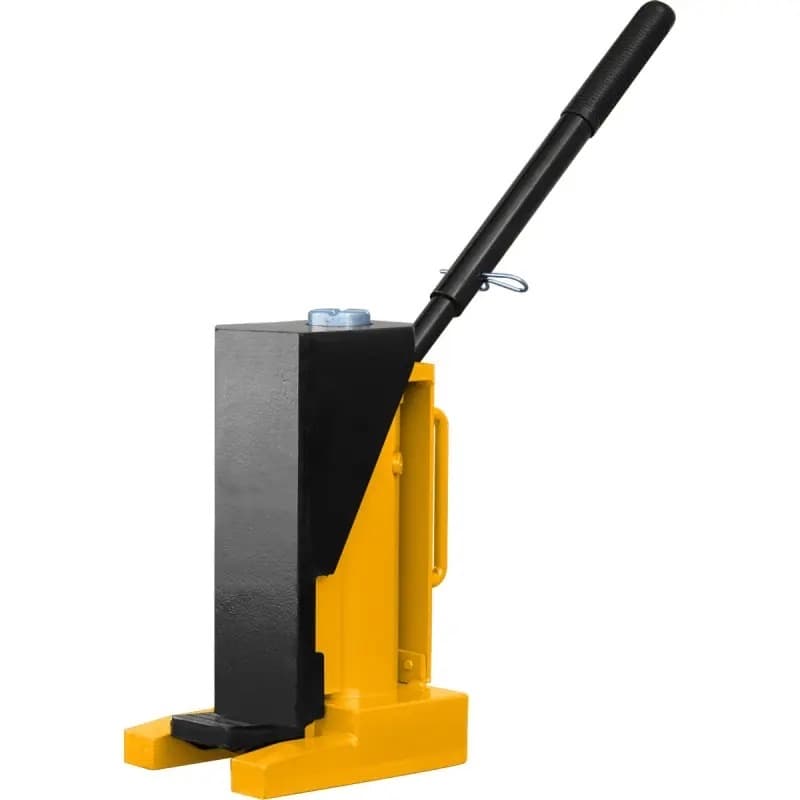
Toe jacks
The basic tool for lifting. Low entry point (often 30-40 mm clearance), allows lifting the machine at individual points.
Sizing: Never size "to the limit." Use at least 1.5× the machine weight in total jack capacity, because you're lifting from a corner — not from the center of gravity — and the load is never evenly distributed.
See toe jacks in our offering →
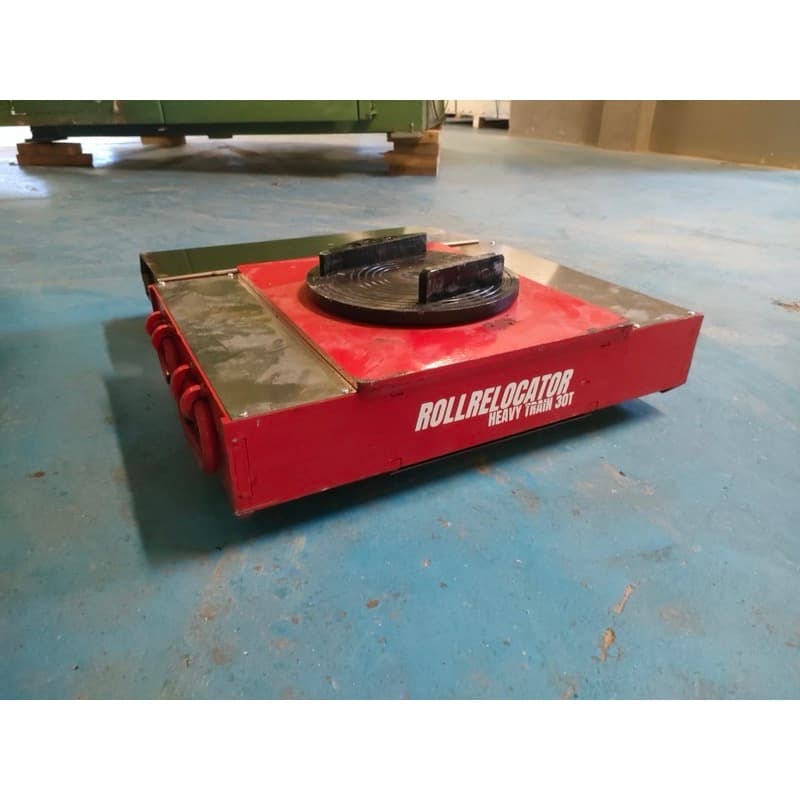
Transport skates
Enable moving the machine across the floor with controlled, jerk-free movement.
Configuration: minimum 3 support points, aligned with the direction of travel, center of gravity accounted for.
See transport skates in our offering →
Pry bar / lever bar
For precise positioning — corrections of a few centimeters, rotating the machine. Helpful for the final "last mile" of placement. See pry bars →
How many people?
Typically:
- 2 people — simple, single-axis moves
- 3 people — safe, comfortable operation
Role division: one person on the jack, one positioning skates, one watching the movement path and guiding. This doesn't require crane operator certification, but it absolutely requires hazard awareness — several tons in motion can't be stopped by hand.
Most common mistakes
1. Bad weight and center of gravity estimation
The machine doesn't behave "symmetrically." On skates it can veer or accelerate unexpectedly. A 3-ton CNC mill with the spindle on one side will pull hard in that direction. Know this before you start.
2. Lifting at a random point
Not every part of the machine structure is load-bearing. Sheet metal covers, cable trays, pneumatic manifolds — these will bend or break. Lift only:
- The main frame / base casting
- Points indicated by the manufacturer
3. Fluids left in the machine
It's not about the weight — it's about safety. When the machine tilts, fluids spill: coolant on the floor destroys traction, hydraulic oil creates a slip hazard. Drain or secure before moving.
4. Trying to slide on leveling feet
This leads to damaged leveling feet, scratched floors, and zero control over movement direction. Always lift onto skates first.
Forklift vs. transport skates
Forklift — when:
- You have access to one with sufficient capacity
- The machine has fork pickup points
- The route is straight with no tight corners
- The operator has experience with machine handling
Skates — when:
- The machine is low or long
- There are turns and narrow passages
- You need precise positioning
- The floor is epoxy or doesn't tolerate heavy point loads
In practice, both methods are often used together — forklift for loading/unloading, skates for in-hall positioning.
Operation sequence
- Verify lifting points (check documentation or assess the frame structure)
- Lift the machine with jacks and place skates underneath
- Align skates with the direction of travel
- Move slowly — one person watches the path at all times
- Position at the destination
- Remove from skates and level
Summary
Machines up to ~5 tons:
- Can be relocated by your own crew
- Require proper equipment — but not a heavy crane
- Key factors: preparation, capacity margin, and movement control
The biggest risk comes not from the weight, but from: lack of planning, bad lifting points, and rushing. If you're doing it yourself, take it seriously — a machine that tips or slides doesn't give you a second chance.
* All timelines in this article are estimates based on the Silesia region (southern Poland) as of early 2026. Actual times may vary depending on machine condition, accessibility, and crew experience.
Moving a machine under 5 tons?
Toe jacks, transport skates, pry bars — everything you need, delivered to your site. Tell us what you're moving and we'll suggest the right setup.
Get a quote →We're based in Silesia (southern Poland) and help with industrial machine moves across the region. Tell us what you need — machine type, weight, timeline — and we'll get back to you with options.
kontakt [at] r5rent.pl (click to reveal)